
AI for Logistics, Warehousing & Transportation
Frontline Operations Safer, More Efficient with AI
Addressing Modern Logistics & Transportation Challenges
Despite the riising costs and shortages of skilled labor, logistics, warehousing, and transportation operations must rely on frontline workers who face mounting pressure to safely boost velocity and efficiency while dealing with increasing regulatory complexity. Inside the warehouse, workers must manage faster throughput, equipment safety, and shifting demands. On the road, drivers and fleet teams contend with long hours, unpredictable conditions, tight delivery windows, and strict compliance requirements.
Logistics and fleet managers exploring AI are rightfully concerned with their frontline workforce. In this type of work, AI should not be viewed as a job eliminator, nor is it merely a technology upgrade.
AI can become a powerful frontline enablement system — helping warehouse workers operate more efficiently, drivers stay safer and stay compliant, maintenance crews keep equipment and vehicles service-ready, and managers stay informed in real time.
Applying AI to Advance Logistics, Warehousing & Transportation Frontline Operations
Smarter Work Guidance & Support
What it is:
Digital guidance with AI-driven support that directs logistics workers in real time with the right instructions, recommendations, and next steps, adapted to task type, role, and conditions.
How it supports workers:
- Provides step-by-step digital work instructions tailored to task complexity and worker skill level
- Suggests 'what to do next' based on priorities, workload, and real time operational conditions
- Supports flexible interfaces including voice commands, wearables, and AR displays
- Reduces cognitive overload by simplifying complex, high-volume, or unfamiliar tasks
- Captures completion data at every step to feed analytics and AI models
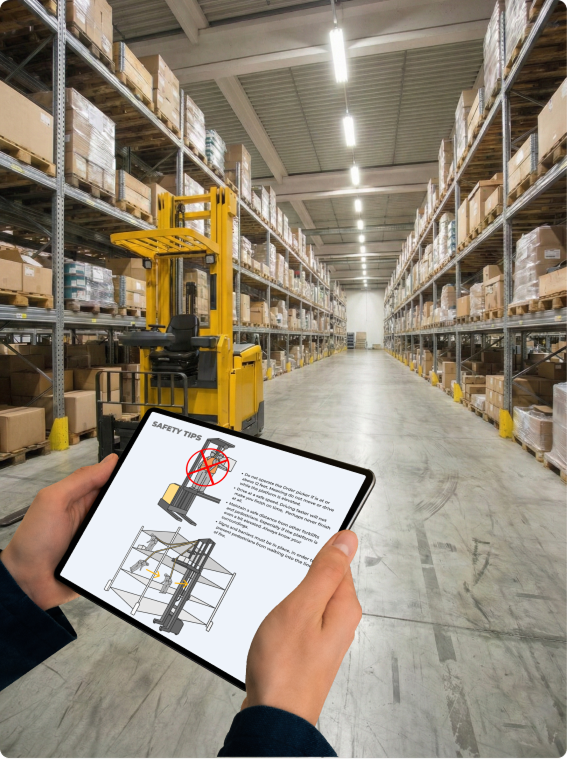
Enforcing Behavior that Creates a Safer Workplace
What it is:
Digital safety incident reporting and inspections with AI guidance and AI-powered computer vision systems that use existing cameras to detect unsafe situations in real time to enforce safe behaviors before incidents occur.
How it supports workers:
- Simplifies and improves hazard reporting and worker execution of safety protocols
- Automates and speeds up the delivery of corrective actions
- Visually detects near misses, congestion risks, and unsafe behaviors
- Identifies PPE non-compliance without constant manual policing
- Highlights behavioral trends to enable mentoring — not blame — in daily safety huddles
- Personalized safety coaching based on observed behavioral data for each worker
- AI-tracked and recommended Tool Talks and safety training assignments
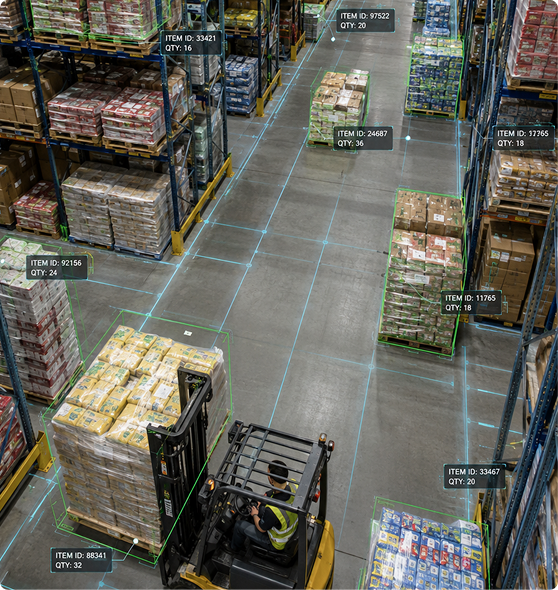
Less Searching, More Doing
What it is:
Computer vision solutions that automatically identify, locate, and track pallets and inventory throughout the warehouse to eliminate manual searches and data gaps.
How it supports workers:
- Eliminates time wasted hunting for missing or misplaced pallets and inventory
- Reduces manual scanning, typing, and paperwork across receiving, storage, and shipping
- Quickly flags misrouted stock before it causes downstream delays
- Builds trust in system accuracy so workers are supported, not blamed, for data gaps
- Feeds real time location data into AI models to improve logistics planning
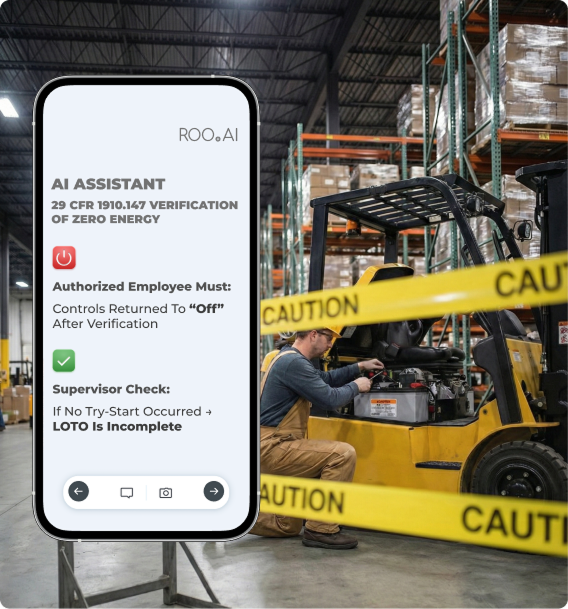
Guidance at Their Fingertips
Natural-Language AI Assistants that Help Workers and Supervisors Access Information Instantly
What it is:
Conversational AI assistants that help workers and supervisors access information instantly without leaving the floor.
How it supports workers:
- 'Ask the AI' instead of digging through SOP binders or navigating multiple systems
- Quick answers to questions on processes, safety and regulatory compliance
- AI-generated pre-shift summaries covering priorities, risks, and bottlenecks
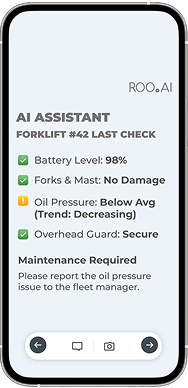
- AI-assisted modification of inspection and workflows based on real time conditions
- Supports floor-level decision-making — not just office analytics
Ready to Empower Warehouse Operators with AI?
Easier Training & Skill Development
What it is:
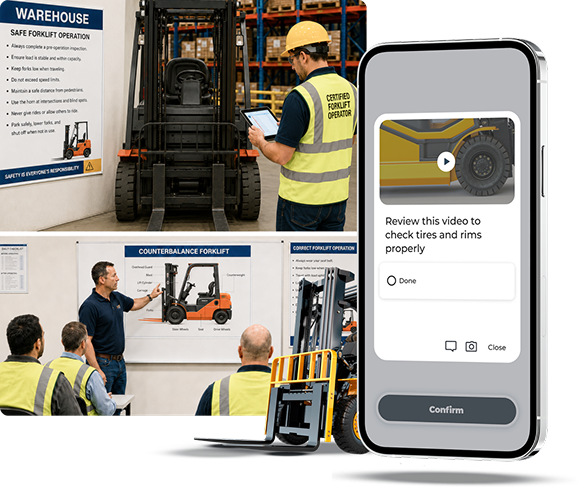
AI-powered training and upskilling tools that adapt to individual worker skill levels, connect learning directly to real job tasks, and deliver coaching at the exact moment it is needed.
How it supports workers:
- Faster onboarding with AI-tailored learning paths based on role and experience
- On-the-job digital coaching that reduces shadowing and classroom training time
- Skills tracking that identifies gaps and triggers targeted training
- Simulated or guided practice for high-risk, high-complexity, or infrequent tasks
- Captures experienced worker knowledge in structured digital workflows before it walks out the door
More Effective Work Planning
What it is:
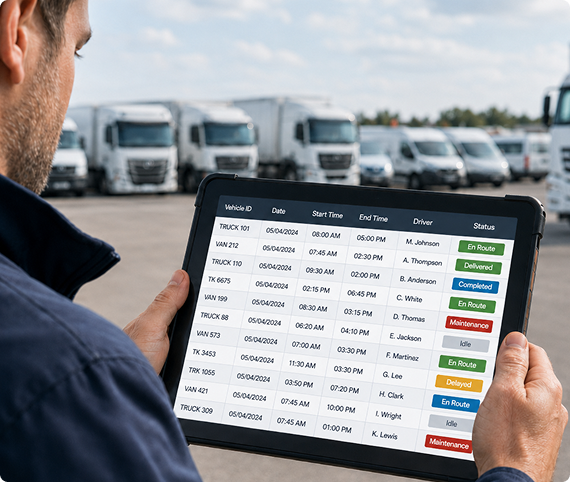
AI Systems that Forecast Workload and Optimize Task Assignment, Shift Planning, and Staffing.
How it supports workers:
- Creates more balanced workloads across teams
- Reducing chronic overburdening of top performers
- Matches tasks to individual skills, certifications, and equipment authorizations
- Improves predictability of daily work and worker expectations
- Surfaces labor gaps before they become throughput bottlenecks
Preventing Incidents Before They Happen
What it is:
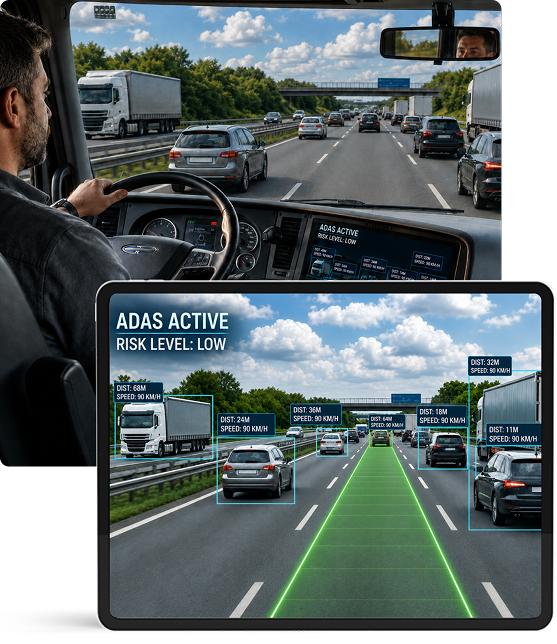
Vision systems powered by AI and Advanced Driver Assistance Systems (ADAS) that use in-cab and external cameras, sensors, and real time analytics to detect risk and actively support safer driving.
How it supports workers:
- Detects forward collision risk, lane departure, unsafe following distance, and blind-spot hazards
- Identifies driver fatigue, distraction, and seatbelt non-compliance in real time
- Provides real time alerts to help drivers react before incidents occur — not after
- Improves situational awareness in urban delivery zones, highways, and adverse weather
- Creates objective records for coaching, insurance claims resolution, and continuous safety improvement
Keeping Equipment Job-ready and Drivers Moving
What it is:
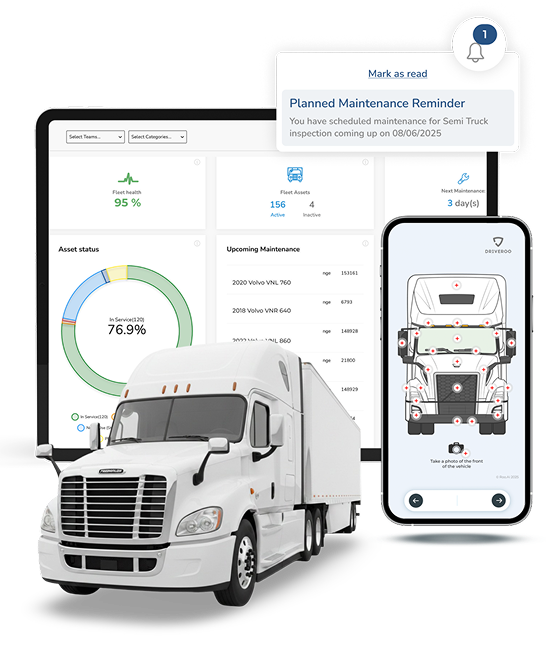
Combinations of telematics, digital inspection platforms, and maintenance management systems aligned by AI to predict vehicle issues before breakdowns occur.
How it supports workers:
- Reduces unexpected breakdowns and costly emergency repairs
- Flags maintenance needs early using real vehicle inspection and telematics data
- Improves vehicle availability and fleet uptime across the entire operation
- Improves response times and first-time fix rates with AI-guided repair assistance
- Generates work orders and parts needs based on inspections and predictive models
- Tracks PM completion, maintenance backlog, and cost per asset in real time
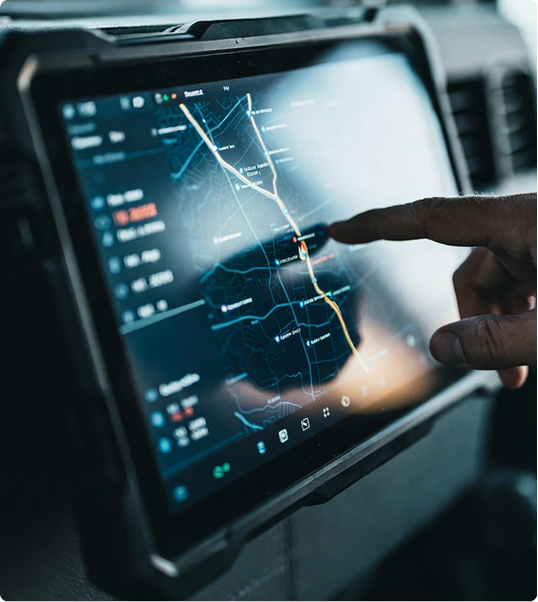
Smarter Routes. Safer, More Efficient Deliveries
What it is:
AI-driven route optimization systems that dynamically plan and adjust routes based on traffic, weather, delivery constraints, and regulatory constraints.
How it supports workers:
- Reduces driver exposure to high-risk roads, congestion, and hazardous conditions
- Improves on-time delivery performance without unrealistic pressure on drivers
- Optimizes routes around hours-of-service requirements and mandatory rest periods
- Reduces unnecessary miles, fuel consumption, and driver fatigue across the fleet
- Continuously improves routing models from real operational data
Staying Ahead of Regulations and Violations
AI Compliance Tools that Identify Risk Early — Before Fines or Enforcement Actions
What it is:
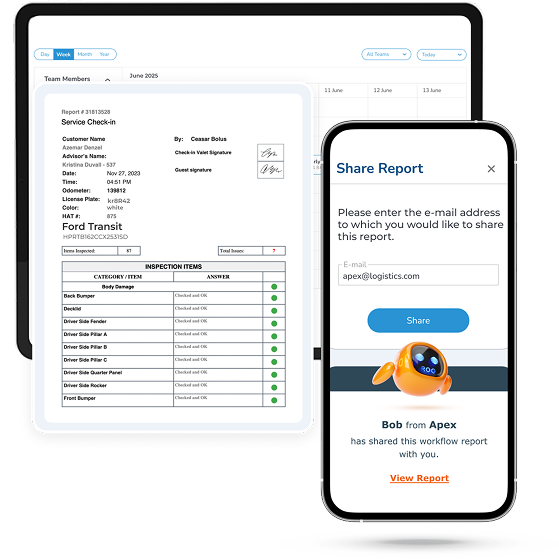
Compliance tools that leverage AI to continuously analyze logs, inspections, driving behavior, and regulatory data to identify compliance risks early and reduce administrative burden.
How it supports workers:
- Early identification of HOS, DVIR, and safety violations before they become enforcement issues
- Automated documentation for audits, roadside inspections, and regulatory reporting
- Significantly reduces paperwork and administrative burden on drivers
- Proactive correction of violations before fines or out-of-service orders occur
- Continuously learns from fleet-wide behavioral and operational data to improve risk predictions
Ready to Empower Your Team with AI?
Why a Digital Frontline Platform Is Essential to AI for Logistics & Transportation
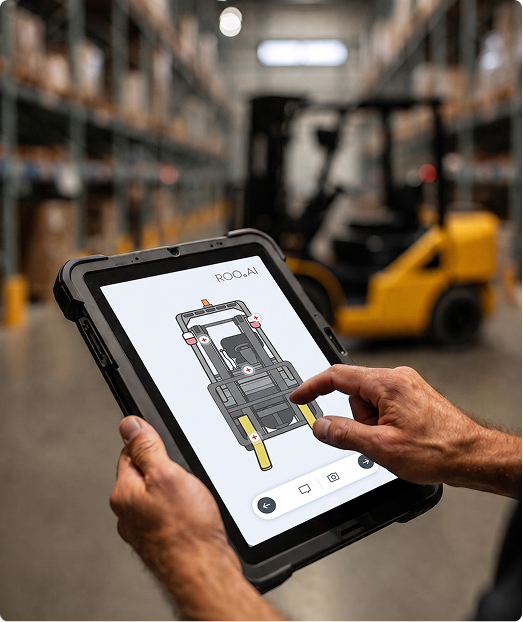
To deliver real value in logistics, warehousing, and transportation AI insights must reach the people doing the work, when they are doing the work. Whether it's a warehouse worker responding to a safety alert, a driver receiving a route update, or a mechanic acting on a predictive maintenance recommendation, AI must reach the frontline to create impact.
That only happens when organizations have a connected digital frontline platform — a unified operational layer that links frontline employees, equipment, workflows, sensors, and AI systems together. Starting with a digital frontline platform lays the foundation that makes all these AI-powered solutions usable, measurable, and scalable.
What it is:
A unified digital platform that assists every frontline worker and driver with:
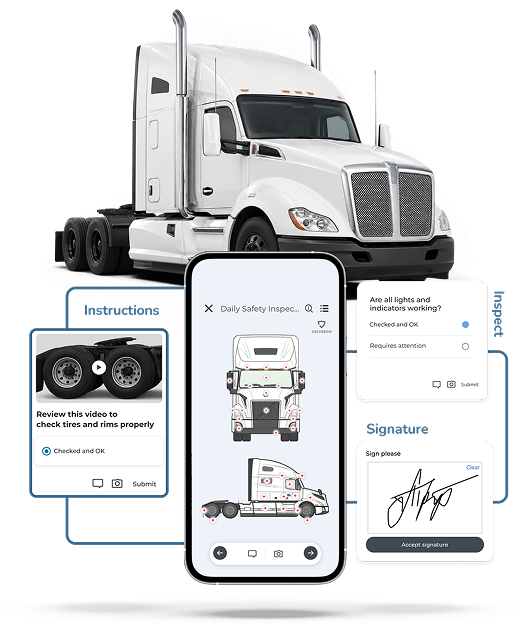
- Digital inspections, maintenance and DOT compliance on mobile
- Embedded training and real time procedural guidance in workflows
- AI copilots for natural language information and direction assistance
- Personalized AI insights and coaching on safety and skills development
- Accessible hazard reporting, in-work safety enforcement and real time safety alerts
- Task assignments, workflow automation, and coordination across teams
- Performance, skills, certifications and compliance tracking
- AI delivered at the point of work affordably through any standard mobile device
How a Digital Frontline Platform Enables More Effective AI Solutions


Why Logistics, Warehouse and Fleet Operations Need a Frontline AI Platform
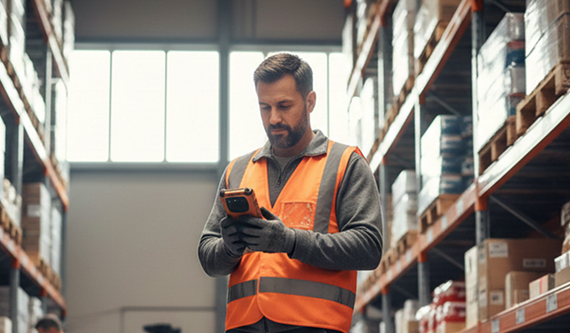
AI Insights Reach the Right Worker at the Right Moment
Instead of dashboards after the fact, guidance and alerts become real time and actionable.
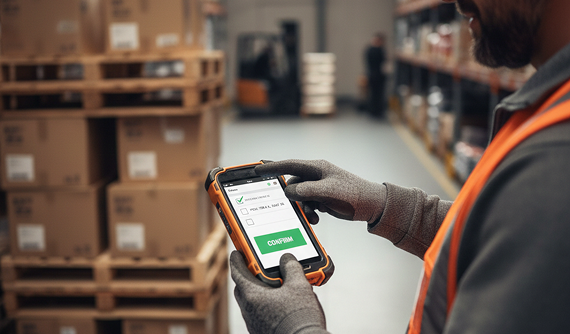
Operational Data Actually Gets Captured
Workers, drivers, vehicles, and equipment become part of the AI data stream — not blind spots in it.
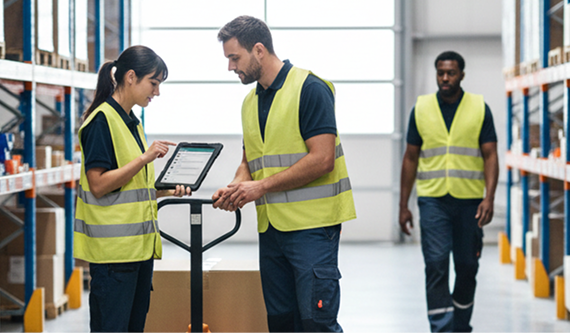
Work Becomes Coordinated, Not Fragmented
Safety alerts, task assignments, maintenance, DVIR and OSHA compliance all flow through a single platform.
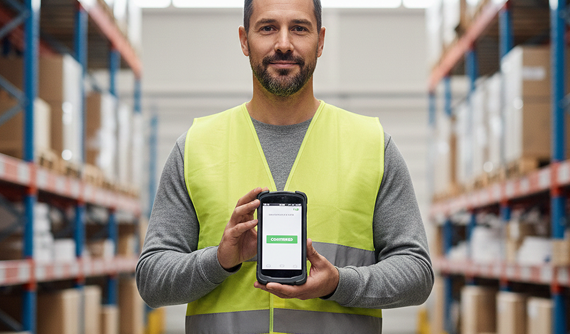
Workers Feel Supported, Not Monitored
The platform turns AI into on-the-spot assistance, personalized coaching, and enablement.
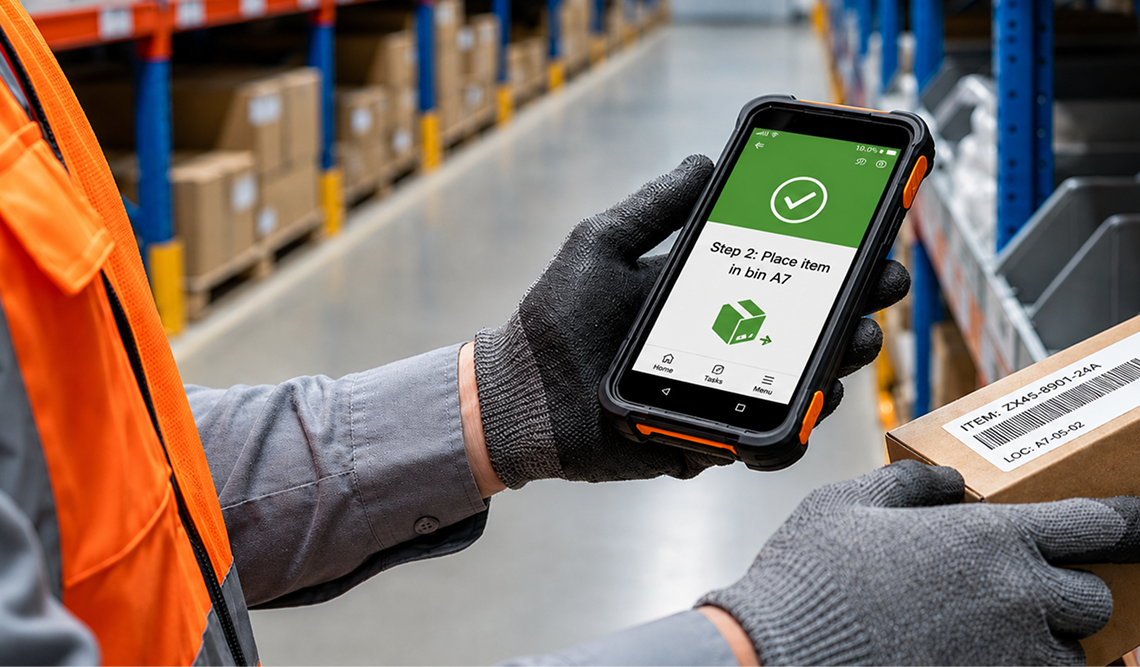
Frontline Skills Are Elevated Continuously
New workers and drivers onboard faster. Training is easier, targeted and delivered in context.
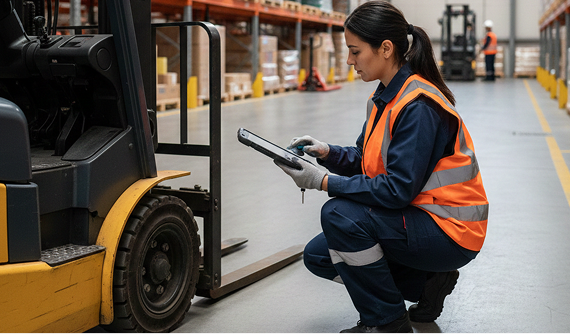
Equipment Safety and Fleet Uptime Improve
Guided inspections deliver detailed issue data for faster fixes and up-to-date condition data for AI-powered predictive maintenance.